Psychology enters advertising
Advertisers stop describing products and start studying the people who buy them.
The modern shop had already changed how people bought. The one-price system, which spread with department stores from the 1870s, promised everyone the same price for the same thing, and ended the haggle in which a seller sized up each customer (Lauer, 2017). Patent medicines showed how far an advertisement could drift from the product. Mrs. Winslow’s Soothing Syrup, sold to mothers for teething babies, contained morphine, and nothing required the label to say so until the Pure Food and Drug Act of 1906.
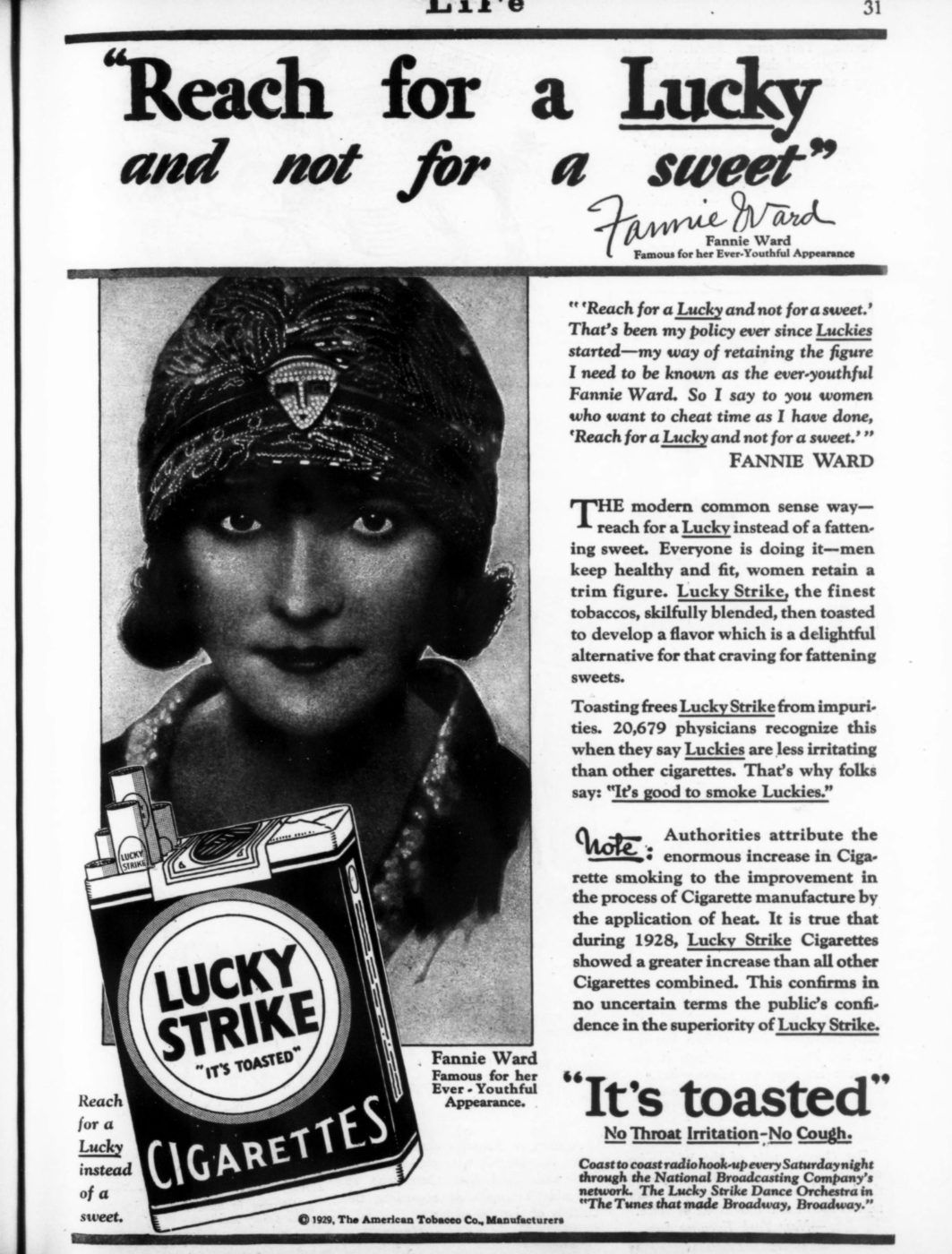
In The Psychology of Advertising, Walter Dill Scott (1908) argued that buyers act on suggestion more than reason. Scott and others studied attention as a resource to be directed: what caught the eye, what held it, and what could be made to recede into the fine print. In the 1920s the behaviourist John B. Watson left academia for the J. Walter Thompson agency (Kreshel, 1990), which paid society figures and film stars to put their names to cold cream and soap.
Walter Lippmann (1922), in Public Opinion, and Edward Bernays (1928), in Propaganda, treated the public as something to be managed by experts. Many of the patterns in this library rest on the same assumption.