
Test what you’ve learned in a practice shop.
The field test is a practice shop with seven dark patterns and one honest feature. Flag what you notice, then check your answers. Nothing you do is recorded.
The feed has no end and the next video starts by itself, so the app never reaches a natural point at which to put it down.
It is also called attention engineering, engagement optimisation or persuasive design, and it is related to “grinding” and gamification in games (Gray et al., 2018).
What it costs you
Time you meant to spend on something else, and the sense that you chose how to spend it.
Specimen
Sunday long run, done.
New bike shop by the station is great.
Three-ingredient soup. Recipe in the comments.
✓ You’re all caught up
You’ve seen every new post from the past 3 days.
Done.
The feed ended, so you could too.
The same mechanics appear in games, streaming and learning apps, and each one takes away a reason to stop.
Before you reveal each answer, decide which of the six attributes the example relies on.
The credits shrink to a corner and the next episode counts down.
Autoplay changes the question from “should I watch another?” to “should I stop it?”, and doing nothing means you keep watching.
A language app counts your days in a row and warns you, late in the evening, that it’s about to reset.
A streak turns a habit into something you can lose, and keeping the number going can start to matter more than the lesson.
Open the game every day for a free spin. The prize is different each time.
Unpredictable rewards are especially habit-forming, which is the same logic the slot machine relies on.
A red number on the app icon counts things you haven’t seen, whether they matter or not.
The badge stays until you open the app to clear it, and opening the app starts the feed.
Addictive design works less by tricking you into a single choice than by removing the points at which you would make one. There is no last post and no pause between episodes, and the app never suggests that you might be done.
The techniques are borrowed from the casino. Schüll’s (2012) study of machine gambling shows how slot machines were tuned for continuous play: fast cycles, unpredictable rewards and as little friction as possible between one bet and the next. Feeds, autoplay and loot boxes rebuild the same loop around attention. Streaks add loss aversion on top, so that leaving costs something you have already earned.
The features are common in mobile apps. In a review of 240 popular Android apps, Di Geronimo et al. (2020) found daily rewards, login bonuses and countdowns on rewards among the dark patterns they classified, and 95% of the apps contained at least one dark pattern of some kind.
The loop is also tuned continuously. Product teams work in short cycles of hypothesis, experiment and measurement (Gothelf, 2013), and when the measure is time spent, the loop optimises for it. Streaming services give viewers a few seconds before the next episode plays, and make the setting that turns autoplay off hard to find (Morley, 2019). In 2018, fifty psychologists wrote to the American Psychological Association accusing colleagues in the tech industry of using “hidden manipulation techniques” on children (Lieber, 2018).
In the terms of Mathur et al. (2021), the effect is covert, because it shapes what you do in ways you aren’t meant to notice. Calo (2014) argues that firms which can study and redesign their interfaces continuously are in a position to exploit the limits of people’s attention at scale. Regulators have begun to treat engagement features themselves as a possible source of harm, alongside the content they deliver.
Casino slot machines were redesigned for what the industry calls “time on device”. Faster spins, near misses, bill acceptors and no natural break between games kept players in what many of them called “the zone”, a state in which continuing to play mattered more than winning (Schüll, 2012).
Broadcasters worked on a gentler version of the same problem. Schedules, cliffhangers and lead-ins were built to carry viewers from one programme into the next, so that switching off was something you had to decide to do. Raymond Williams (1974) called the result “flow”, an evening planned as one sequence rather than a set of separate programmes.
Read the chapter: The machine zone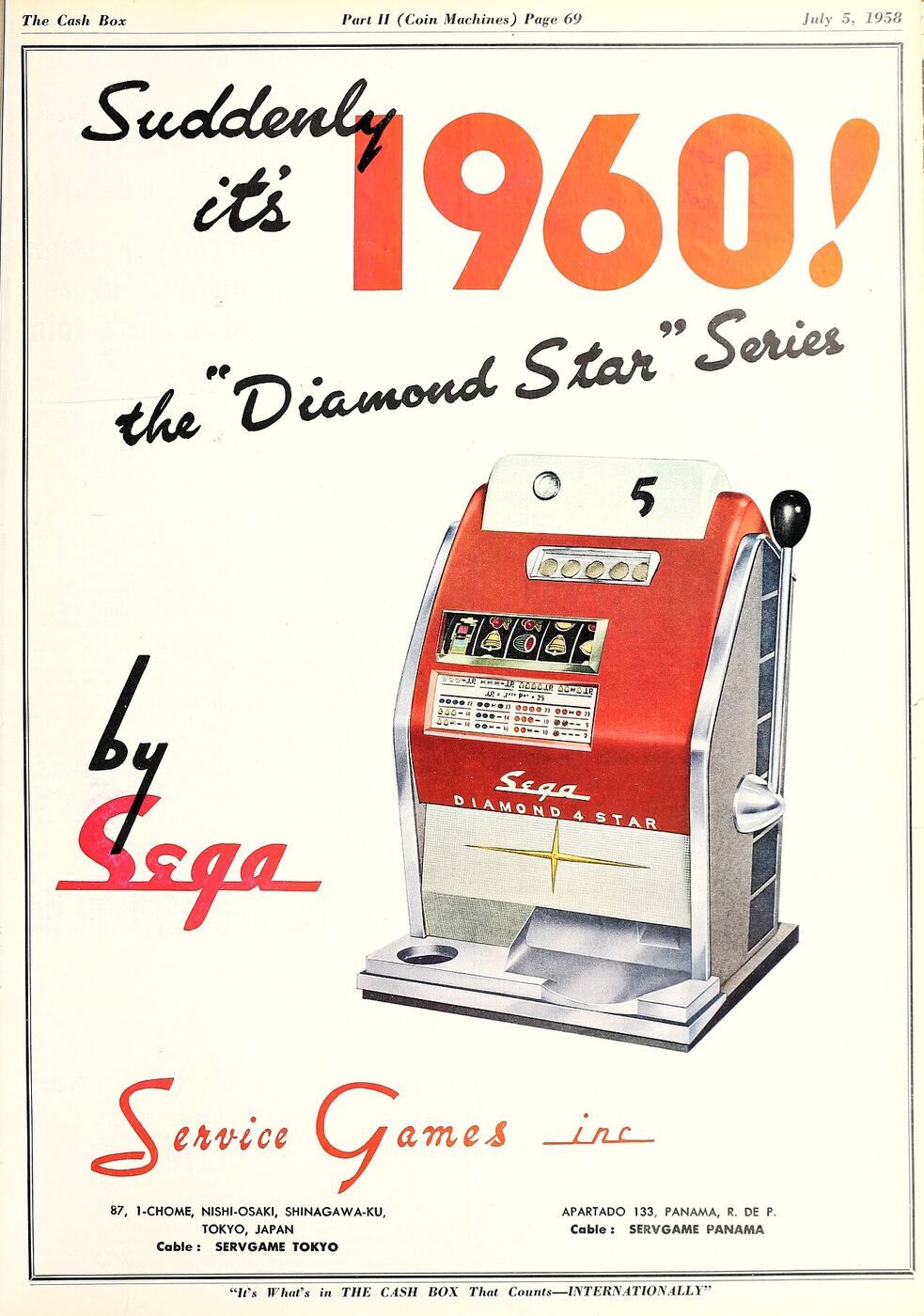
Give the feed an end, make autoplay something people switch on, and measure whether people found what they came for rather than how long they stayed.
Activity
Find an example
Look for this pattern in an app or website you used this week. Note the date, what you saw, which of the six attributes it relies on and how you would make it honest. If it’s a clear example, send it to us.
| Where | What applies | Status |
|---|---|---|
| European Union | Digital Services Act: the Commission preliminarily found TikTok’s infinite scroll, autoplay, push notifications and recommender system in breach of the Act. (official source) | Preliminary finding, Feb 2026 |
| European Union | Digital Services Act, Article 28: platforms accessible to minors must ensure a high level of privacy, safety and security. (official source) | In force |
| United Kingdom | Online Safety Act, Protection of Children Codes: services must reduce children’s exposure to harmful content, including through their feeds. (official source) | In force, July 2025 |
| New York | SAFE for Kids Act: no algorithmic “addictive feeds” or overnight notifications for minors without parental consent. (official source) | Takes effect Jan 2027 |
| European Union | Digital Fairness Act: expected to address addictive design directly. (official source) | Proposal expected Q4 2026 |
Last reviewed October 2026. A summary, not legal advice.
Addictive design. (2026). In Deceptive by Design: A history and field guide to manipulative interfaces. https://deceptivebydesign.org/patterns/addictive-design/
Test what you’ve learned in a practice shop.
The field test is a practice shop with seven dark patterns and one honest feature. Flag what you notice, then check your answers. Nothing you do is recorded.