
Test what you’ve learned in a practice shop.
The field test is a practice shop with seven dark patterns and one honest feature. Flag what you notice, then check your answers. Nothing you do is recorded.
The price you pay ends up higher than the price you were shown, because extras and fees are added on the way to the checkout.
It covers Brignull’s (2010) “sneak into basket” and “hidden costs”, and competition law calls the second “drip pricing”. Gray et al. (2018) use “sneaking” for the wider category.
What it costs you
More money than the price you chose, and extras you didn’t want.
Specimen
Tonefield One, wireless headphones
Black · Noise cancelling · 40-hour battery
$39.00
Free returns within 30 days.
Your basket
Delivery
Standard delivery, 3–5 days.
Review and pay
Card ending 4417
Thanks! Your order is on its way.
Review and pay
The product page said $39.00.
Tonefield One, wireless headphones
Black · Noise cancelling · 40-hour battery
$45.50
Includes $6.50 handling. Delivery is free.
Your basket
Optional extras
Paid.
The price on the product page was the price you paid.
In each of these, the price you see first is lower than the price you end up paying.
Before you reveal each answer, decide which of the six attributes the example relies on.
Tickets are listed “from $45”. The service and facility fees appear once you’ve picked seats.
Fees everyone pays are left out of the advertised price. Since May 2025 the FTC requires the total up front for US live-event tickets.
The room is $129 a night. A “destination fee” is mentioned in small print and charged at the desk.
Splitting a mandatory fee from the room rate makes the hotel look cheaper in search results than it is.
Travel cover is selected for you on a busy page between seat maps and baggage.
A pre-selected add-on counts on you not noticing it. In the EU, extra payments need your express consent, and a pre-ticked box doesn’t give it.
Delivery is $0. A service fee and a small-order fee appear in the last screen.
The fee you were told about is waived, and two you weren’t told about take its place.
Sneaking usually shows the true price eventually, but only at the point where you are least likely to look closely, after you have chosen, entered your details and committed to finishing.
It takes two main forms. In sneak into basket, an item you didn’t choose (insurance, a greeting card, a donation) is added for you, often through a box that is already ticked. In hidden costs, the advertised price grows at the last step with service, handling or booking fees. In their crawl of 11,000 shopping sites, Mathur et al. (2019) found both, including a greeting card added to an order where the customer had asked for none, and a “care and handling” charge revealed only at the final step.
Both rely on effort already spent. By the time the extra appears, you have searched, compared and typed in a card number, and starting again feels like a loss. You also have to notice an extra before you can remove it. When Voigt et al. (2021) added a €1 record to a test shop’s basket, 38 of the 134 people who used that version of the shop bought it without meaning to. Those who noticed rated sneaking the most annoying of the five dark patterns tested.
Mathur et al. (2021) describe it as information hiding, because what you need in order to decide is withheld or delayed until it no longer feels like a choice.
Patent medicines were sold on what they promised, and buyers were rarely told what they contained. Mrs. Winslow’s Soothing Syrup, advertised to mothers for teething babies, contained morphine, and nothing required the bottle to say so. In 1911 the American Medical Association listed it among the “baby killers”.
The US Pure Food and Drug Act of 1906 made sellers declare morphine, opium, cocaine, alcohol and other dangerous ingredients on the label. Online sneaking breaks the principle behind that law, which is that what you are buying, and anything added to it, should be visible before you pay.
Read the chapter: Psychology enters advertising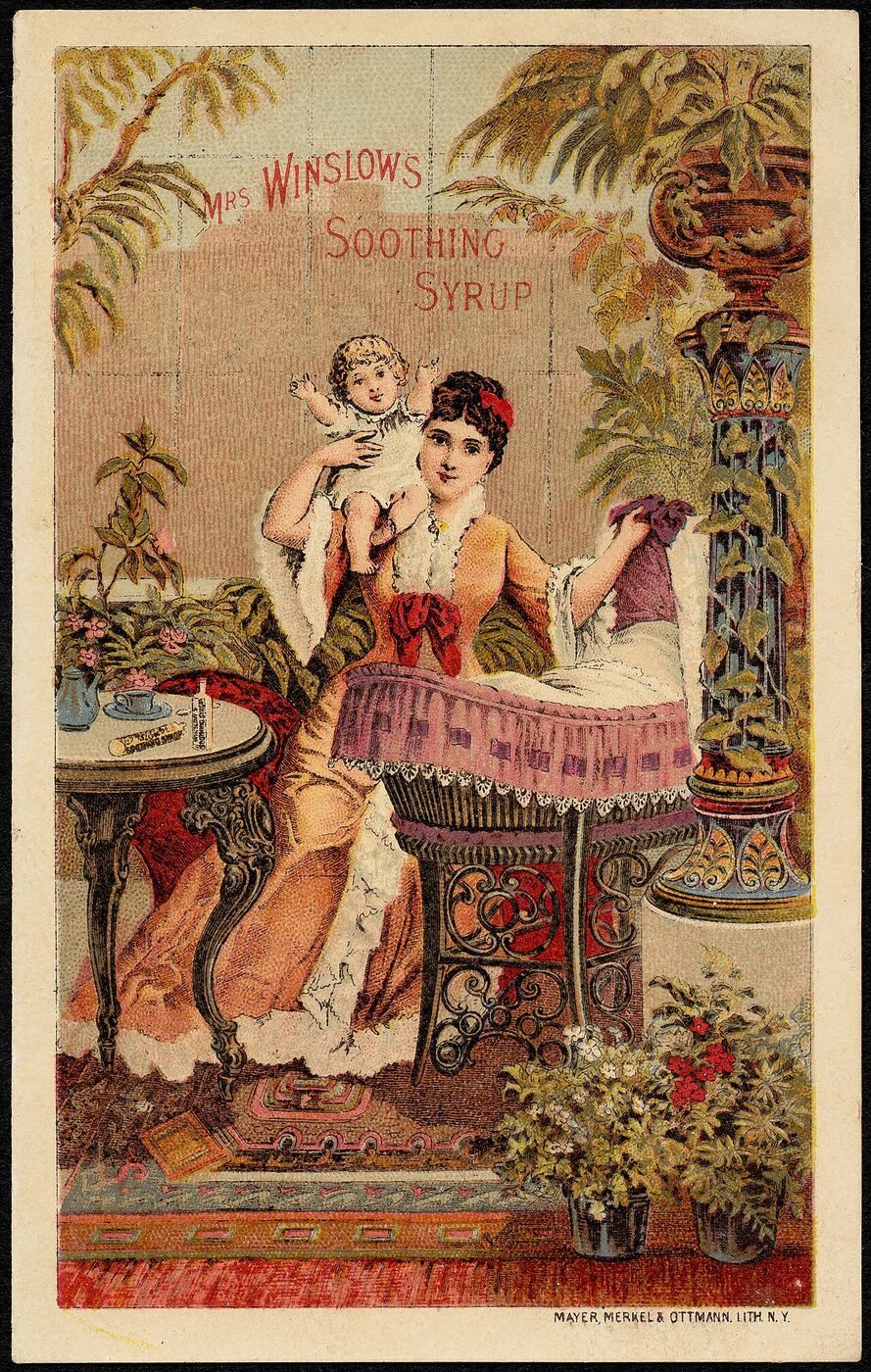
Include every unavoidable fee in the first price, and offer extras unticked, with their price.
Activity
Find an example
Look for this pattern in an app or website you used this week. Note the date, what you saw, which of the six attributes it relies on and how you would make it honest. If it’s a clear example, send it to us.
Last reviewed October 2026. A summary, not legal advice.
Sneaking. (2026). In Deceptive by Design: A history and field guide to manipulative interfaces. https://deceptivebydesign.org/patterns/sneaking/
Test what you’ve learned in a practice shop.
The field test is a practice shop with seven dark patterns and one honest feature. Flag what you notice, then check your answers. Nothing you do is recorded.