Test what you’ve learned in a practice shop.
The field test is a practice shop with seven dark patterns and one honest feature. Flag what you notice, then check your answers. Nothing you do is recorded.
An advertisement is dressed up as a friend’s post, a neutral review or a news story, so that it can borrow their credibility.
It includes Brignull’s (2010) “disguised ads” and Mathur et al.’s (2019) “testimonials of uncertain origin” and “activity notifications”, and it overlaps with native advertising and astroturfing.
What it costs you
Money and trust spent on a recommendation that was paid for, and less reason to believe the honest ones.
Specimen
Sunday long run done. Legs are toast. Same time next week?
Sunday long run? These shoes are unreal 🔥
Obsessed with my new Stride Cloud 3s. Not even joking, my knees have never felt better… #ad @stride.co
The best running shoes of the year, tested
What do you actually run in?
Top reviews · Stride Cloud 3
★★★★★ “Best running shoes I’ve ever owned. Worth every penny!”
★★★★★ “Best running shoes I’ve ever owned. Worth every penny!”
★★★★★ “Best running shoes I’ve ever owned. Worth every penny!”
Sunday long run? These shoes are unreal 🔥
1Obsessed with my new Stride Cloud 3s…
2The best running shoes of the year, tested
3★★★★★ “Best running shoes I’ve ever owned. Worth every penny!”
★★★★★ “Best running shoes I’ve ever owned. Worth every penny!”
4Sunday long run done. Legs are toast. Same time next week?
Meet the Stride Cloud 3, our new everyday running shoe.
Stride sent me the Cloud 3 and paid for this post. Here’s what I think after a month.
How we designed the Cloud 3
Reviews · Stride Cloud 3
★★★★☆ “Comfortable, but runs half a size small.”
Advertisers can imitate any format that people have learned to trust, from search results to review scores.
Before you reveal each answer, decide which of the six attributes the example relies on.
Paid results sit above the ordinary ones, in the same font and layout.
A small label counts as a disclosure, but it is designed to be easy to miss.
A badge counts recent purchases, or shows strangers buying in real time.
Mathur et al. (2019) found plug-ins that could generate these messages whether or not anyone had bought anything.
A comparison table crowns a winner, which turns out to be the brand paying the biggest referral fee.
Comparison sites can fairly earn commission, but readers should be told when the commission decides the ranking.
A new product has a near-perfect rating, almost all of it five stars, nearly all posted at once.
Bought or incentivised reviews tend to arrive in bursts and say similar things. The US FTC banned fake reviews outright in 2024.
Borrowed trust works by putting a sales message inside a format you have learned to believe: a recommendation from someone like you, a crowd of satisfied customers, a news article, a post from your own feed.
People rarely check these signals closely. When a decision feels risky, such as handing personal details to an unfamiliar site, shoppers judge trustworthiness by intuition rather than by reading policies and security seals (Roghanizad & Neufeld, 2015).
Some of these signals are fabricated. In their crawl of 11,000 shopping sites, Mathur et al. (2019) found “social proof” messages on 275 sites, including notifications that strangers had just bought something. Some sites showed the same set of testimonials with different customer names attached. Several of the third-party plug-ins behind these messages openly advertised that they could generate fake orders.
More often, the content is real but its sponsorship is not disclosed. Di Geronimo et al. (2020) found ads presented as ordinary content, and sponsored items not clearly different from everything around them, among the dark patterns in popular apps.
Experiments suggest the technique works. In Luguri and Strahilevitz’s (2021) experiments, adding a message about how many other people had accepted raised the share of people accepting a paid service from about 15% to 22%. Mathur et al. (2021) describe the pattern as deceptive, because it creates a false belief about where a message comes from or how many people stand behind it.
In the 1920s, as advertising turned to psychology, agencies including J. Walter Thompson paid celebrities and society figures to put their names to cold cream and soap. The product borrowed their status, and readers were invited to share in it.
Radio and television later blurred the line further, with presenters reading sponsors’ messages in the same voice as the programme. Regulators eventually required paid endorsements to be disclosed and to reflect the endorser’s honest view. Online, endorsements often come from strangers, or from reviews that no customer wrote.
Read the chapter: Psychology enters advertising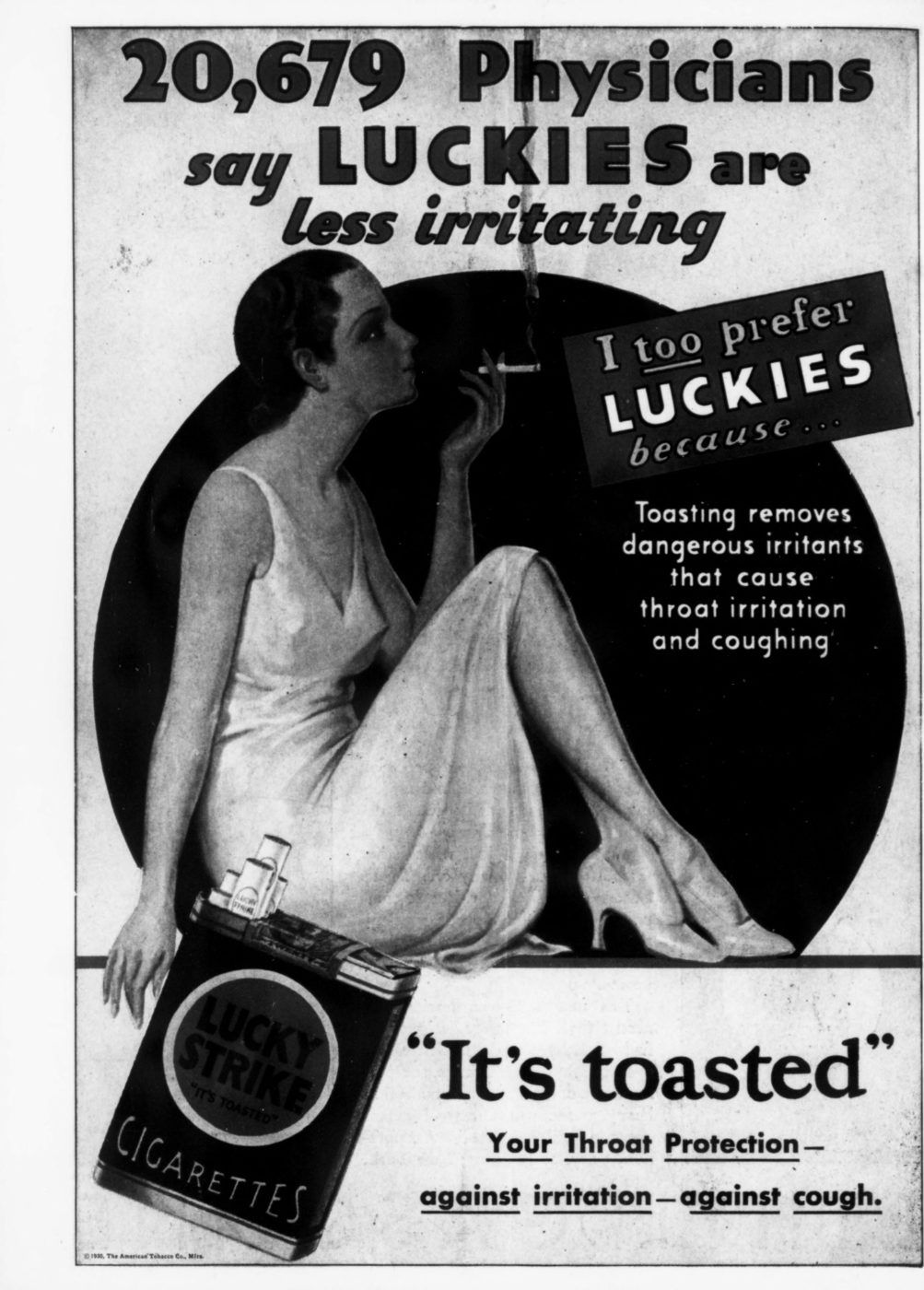
Put the label at the top in plain words, show the full spread of reviews, and never generate activity that didn’t happen.
Activity
Find an example
Look for this pattern in an app or website you used this week. Note the date, what you saw, which of the six attributes it relies on and how you would make it honest. If it’s a clear example, send it to us.
Last reviewed October 2026. A summary, not legal advice.
Borrowed trust. (2026). In Deceptive by Design: A history and field guide to manipulative interfaces. https://deceptivebydesign.org/patterns/borrowed-trust/
Test what you’ve learned in a practice shop.
The field test is a practice shop with seven dark patterns and one honest feature. Flag what you notice, then check your answers. Nothing you do is recorded.